
Book Overview
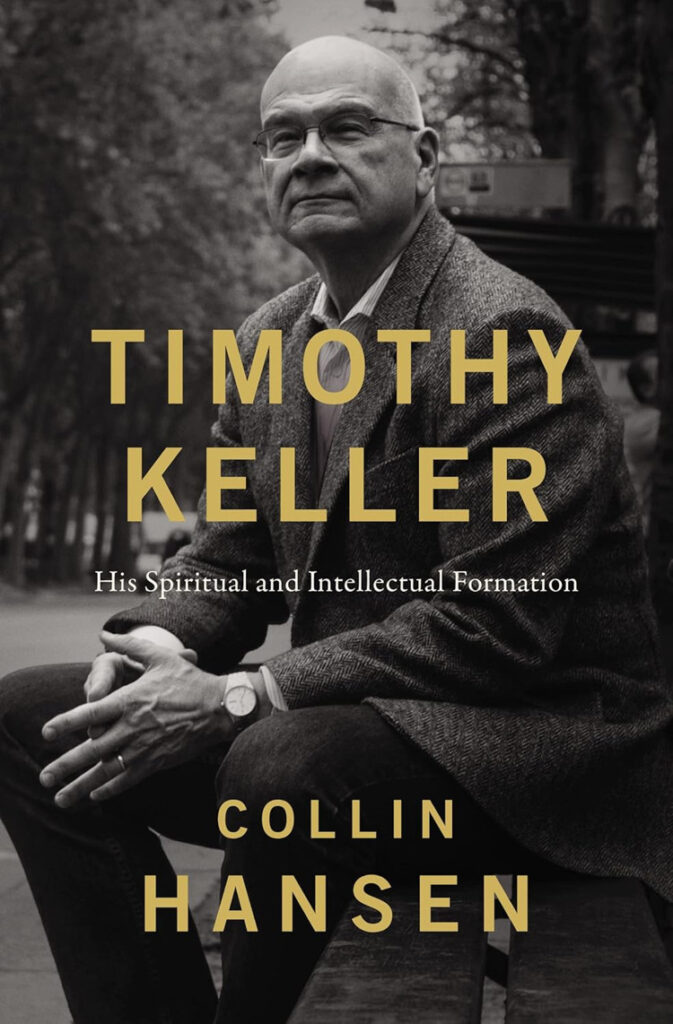
Timothy Keller: His Spiritual and Intellectual Formation by Collin Hansen is not a conventional biography, nor is it a simple appreciation of Keller’s ministry. It is more focused than that. The book aims to trace the shaping influences behind Keller—what formed him spiritually, the thinkers and movements that shaped his instincts, and how those influences came together in the ministry many have come to know through Redeemer Presbyterian Church and his wider writing.
Rather than moving quickly through Keller’s life chronologically, Hansen takes time to explore the layers beneath the surface. There is attention given to Keller’s early life, his conversion, his theological education, and his early ministry experiences, but always with an eye on formation rather than just events. The question driving the book is not simply “what happened?” but “what shaped him into the kind of pastor and thinker he became?”
A significant portion of the book is devoted to the intellectual influences on Keller. Names like Jonathan Edwards, Cornelius Van Til, and others appear not as passing references, but as real shaping forces. Hansen shows how Keller did not simply inherit these influences wholesale, but engaged with them, adapted them, and in some cases held them in tension. That helps explain why Keller’s ministry often felt both deeply rooted and yet unusually accessible.
There is also a strong emphasis on Keller’s pastoral heart. The book does not present him as merely a thinker or communicator, but as someone deeply concerned with how the gospel meets people in real contexts—particularly in urban, secular environments. Hansen traces how Keller’s time in New York City sharpened his ability to engage with scepticism, doubt, and cultural questions without losing theological clarity.
Another thread running through the book is Keller’s commitment to what might be called “winsome orthodoxy.” He was not interested in softening the gospel, but he was deeply concerned with how it was presented. That combination—clarity without harshness, conviction without unnecessary confrontation—did not appear out of nowhere. Hansen shows how it was formed over time through a mixture of theological conviction, pastoral experience, and careful listening to the culture around him.
The tone of the book is measured and respectful, but not uncritical. Hansen clearly appreciates Keller’s ministry, but he also acknowledges tensions and questions. There is an awareness that Keller’s approach has not been universally received in the same way, particularly among those who worry about cultural accommodation. Those concerns are not dismissed, but they are placed within the broader picture of Keller’s intentions and context.
Overall, this is a book about formation more than achievement. It is less interested in cataloguing success and more interested in understanding how a particular kind of ministry came to exist. That makes it especially useful for those who want to think more deeply about how pastors and leaders are shaped over time.
What did you find most interesting? What did you takeaway from it?
One of the most interesting aspects of the book is how it shows the combination of influences that shaped Keller. It would be easy to reduce him to a single stream—Reformed theology, urban ministry, or cultural engagement—but Hansen resists that. Instead, he presents a more layered picture. Keller is shown as someone formed by multiple currents that do not always sit comfortably together, yet somehow became integrated in his ministry.
That is particularly clear in how the book handles Keller’s intellectual influences. The interaction between figures like Edwards and Van Til is not always straightforward, and yet Keller seems to draw from both in meaningful ways. The takeaway here is that formation is rarely neat. It often involves holding together different emphases and working through how they fit in practice.
Another striking takeaway is the importance of context. Keller’s ministry in New York City is not treated as a backdrop, but as a shaping force. The questions he faced, the people he engaged with, and the challenges of that environment all contributed to how he preached, wrote, and led. That highlights how ministry is not formed in isolation. Context matters, and it often sharpens certain instincts while testing others.
The book also brings out the role of suffering and limitation. Keller’s ministry was not simply a story of steady success. There were challenges, setbacks, and personal struggles along the way. Hansen does not dwell on these in a dramatic way, but he includes them enough to show that formation often happens through difficulty as much as through opportunity.
Another takeaway is how intentional Keller was in thinking about communication. His ability to speak to sceptical audiences did not come from a desire to be relevant for its own sake, but from a careful effort to understand the questions people were actually asking. That kind of listening shaped how he presented the gospel, often making it clearer rather than diluted.
More broadly, the book encourages a longer view of ministry. Keller did not emerge fully formed. His instincts developed over time, through study, reflection, and experience. That is a helpful reminder in a context where there can be pressure for immediate clarity or quick impact.
How were you challenged?
This book challenges the tendency to separate theology from context. It is easy to think of theological clarity as something that exists independently of the setting in which ministry takes place. Hansen shows that while the truth itself does not change, how it is applied and communicated requires careful thought. That raises questions about whether enough attention is being given to the people and cultures being reached.
It also challenges assumptions about formation. Many look for quick development—courses, resources, or strategies that can accelerate growth. This book presents a slower, more complex picture. Formation involves reading, reflection, relationships, experience, and often difficulty. That can feel less efficient, but it is likely more realistic.
For those involved in teaching or preaching, there is a challenge around communication. Keller’s example raises the question of whether the gospel is being presented in a way that genuinely engages with the questions people have, or whether it is assumed that clarity alone is enough. The book does not suggest changing the message, but it does press for greater care in how it is explained.
There is also a challenge in how influence is viewed. Keller drew from a range of sources, but he did so thoughtfully. The book invites readers to consider what is shaping them—whether those influences are being examined carefully or simply absorbed.
On a more personal level, the book challenges the desire for a simple model to follow. Keller’s formation is not presented as a template that can be easily replicated. That can be frustrating, but it is also freeing. It suggests that faithful ministry may look different in different contexts, even while holding to the same core truths.
Why should someone else read it?
This book is particularly helpful for those in ministry or preparing for it. It offers a window into how a well-known pastor and thinker was shaped over time, which can be both instructive and grounding. It helps set realistic expectations about growth, development, and the complexity of ministry.
It would also be valuable for those who have been influenced by Keller’s work and want to understand it more deeply. The book provides context that helps explain why his writing and preaching have the tone and emphasis they do.
For church leaders, the book can prompt reflection on how they themselves are being formed. It raises questions about influences, priorities, and the relationship between theology and context.
Even for general readers, the book offers insight into how Christian thought engages with culture. It shows that careful, thoughtful engagement is possible without abandoning theological conviction.
At the same time, it is worth reading with discernment. Keller’s approach will not be agreed with in every detail, and Hansen’s portrayal invites reflection rather than simple imitation. That is part of the value. It encourages thoughtful engagement rather than passive acceptance.
In the end, Timothy Keller: His Spiritual and Intellectual Formation is a book that slows things down. It invites the reader to think about how ministry is shaped over time, how influences interact, and how faithfulness is worked out in real contexts. It is not a book of quick lessons, but one that rewards careful reading and reflection.