
Book Overview
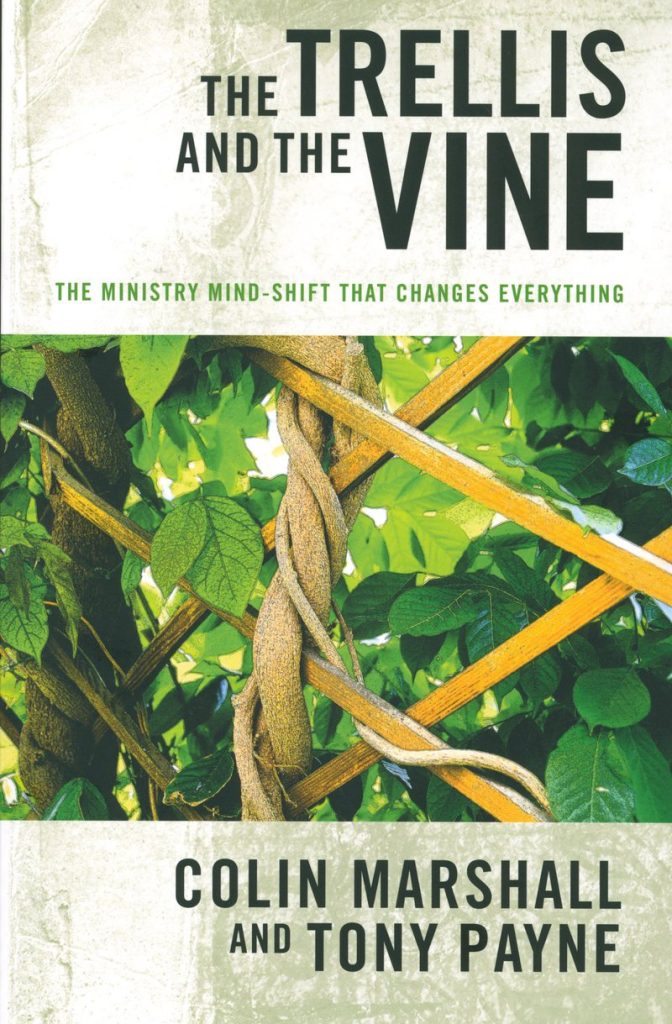
The Trellis and the Vine is a short book, but it has had a long shelf life for a reason. Colin Marshall and Tony Payne are not trying to offer another clever ministry method or a fresh church growth formula. The burden of the book is much simpler, and much more searching than that. It asks whether churches have become too absorbed with maintaining structures, programmes, committees, events, and systems, while slowly neglecting the central work Christ actually gave his people to do: making disciples through the ministry of the word.
That is the heart of the book’s image. The trellis is the visible framework that supports growth. In church life that means the organisational side of ministry: rotas, buildings, staffing, budgets, meetings, strategies, and all the practical structures that make things function. None of that is dismissed as unimportant. The authors are too wise for that. Vines need trellises. Churches need order. Ministry without any structure quickly becomes chaotic, fragile, and hard to sustain. But the vine is the living thing. The vine is the people of God growing to maturity in Christ and spreading through prayerful, word-centred disciple-making. The problem comes when the trellis stops serving the vine and starts replacing it.
That basic distinction gives the whole book its force. Marshall and Payne are pressing on a common weakness in evangelical churches, especially churches that care deeply about biblical faithfulness. It is possible to be busy, orthodox, organised, and even outwardly fruitful, while still drifting into a ministry culture where the main energy goes into preserving the machinery. A church can become very efficient at running church activities without really training people to speak the gospel, read the Bible with others, pray with purpose, or help fellow believers grow in Christ. That is what makes the book unsettling. It is not attacking liberalism, worldliness, or obvious compromise. It is exposing the more respectable danger of misplaced effort.
The tone of the book is one of practical conviction. It is not academic, and it is not weighed down with unnecessary theory. It reads like the product of long pastoral observation. The arguments come through clearly, and the examples feel grounded in real church life. There is a recurring concern throughout that every Christian should begin to see ministry not as something done mainly by professionals, but as the calling of the whole body. That does not flatten biblical distinctions or remove the responsibility of elders and pastors. Rather, it sharpens it. Leaders are meant to equip others for works of service, not quietly absorb all meaningful ministry into themselves.
One of the strengths of the book is that it moves from principle to culture. It is not simply saying, “add more training.” It is asking churches to rethink what success looks like, what leaders should prioritise, how time should be spent, and what kind of people should be raised up. In that sense it is a book about theological ministry philosophy far more than quick technique. It is about recovering a biblical sense that ministry is fundamentally word-work in people’s lives. Preaching matters, of course, but so do the many ordinary conversations in which Scripture is opened, applied, and prayed through. The authors want churches to notice that real gospel growth often happens through deliberate, relational, person-to-person ministry, not only through visible public platforms.
Theologically, the book sits in a recognisably evangelical frame. It is shaped by convictions about the sufficiency of Scripture, the centrality of the gospel, the necessity of conversion, and the goal of presenting everyone mature in Christ. Colossians 1 is especially close to the spine of the argument. That gives the whole thing a healthy seriousness. The aim is not merely to recruit volunteers or improve church participation, but to see people won to Christ and grown in him. The church is not being treated as an institution to manage, but as a people being formed by the word under the lordship of Christ.
Even where readers might want more nuance in places, it is hard to miss why the book has been so influential. It has a rare clarity. It names something many church leaders have sensed but not always articulated. It challenges the assumption that more activity means more ministry. And it offers a vision of church life that feels at once biblical, demanding, and strangely liberating. It reminds pastors, elders, ministry leaders, and ordinary members alike that the work that matters most is often quieter, slower, and less impressive than the work people naturally celebrate.
What did you find most interesting? What did you takeaway from it?
What stands out most is how effectively the book reorders ministry instincts. Many books give useful advice, but this one has a way of changing what a reader notices. After reading it, it becomes harder to look at church life in the same way. A full calendar no longer automatically looks healthy. A smoothly run Sunday no longer seems like enough. A church with lots of roles to fill but very little intentional disciple-making starts to feel out of balance. The book quietly retrains the eye.
One especially striking feature is the insistence that ministry is people-work shaped by the word of God. That may sound obvious, but in practice it is easy for churches to behave as if ministry is mainly event management. The takeaway here is not that programmes are bad, but that programmes must remain servants. The real question is always whether people are being brought to Christ, grounded in Scripture, helped toward repentance, strengthened in holiness, and equipped to help others do the same. That is a much more searching grid than simply asking whether something is well attended or well organised.
Another memorable takeaway is the strong emphasis on training. The book does not only call for leaders to work harder. It calls for them to multiply ministry by training others to handle the word faithfully in ordinary settings. That is deeply practical and deeply biblical. It pushes against a consumer model of church, where members receive ministry but do not grow into ministering themselves. There is something refreshing in that. It restores dignity to ordinary Christian service. A mature believer meeting one-to-one with a younger believer to read Mark’s Gospel, pray, and talk honestly about sin and encouragement may not look impressive, but the book makes a compelling case that this is very near the centre of real church growth.
There is also a helpful realism in the book’s vision. Vine work is slow. It is not tidy. People do not mature on a schedule. Conversations are often repeated. Care is costly. Progress can be difficult to measure. That matters because many churches are tempted toward models of fruitfulness that can be counted quickly and displayed easily. The book helps recover patience. It encourages long obedience in the same direction. It suggests that leaders should invest in work that may not show dramatic results next month, but may bear much fruit over years.
Another thing worth noting is that the book does not allow ministry philosophy to remain abstract. It presses into staffing, leadership development, church culture, and decision-making. That makes its challenge more concrete. It is one thing to say that discipleship matters. It is another to ask whether a church budget, staff structure, and weekly rhythms actually reflect that conviction. The book is interesting partly because it refuses to let the reader hide behind general agreement. It keeps asking: what would this change in practice?
The broad takeaway is that faithful ministry must be evaluated by whether it serves the growth of the vine. That sounds simple, but it reaches into nearly everything. It affects how leaders spend their week, how churches define maturity, how members think about service, how success is reported, and how future leaders are identified. It also encourages a more hopeful view of ordinary ministry. Churches do not need to chase novelty or depend on personality-driven models to be fruitful. They need the word of God, prayer, deliberate relationships, and a willingness to train and release others. That is not flashy, but it is strong.
How were you challenged?
This book is challenging because it exposes forms of faithfulness that may not be as faithful as they appear. It confronts the temptation to confuse maintaining church life with building Christ’s church. That lands especially hard in settings where people are sincere, hardworking, and sacrificial. It is possible to give many hours to good things and still avoid the harder work of actually investing in people spiritually. Running systems can feel productive because the tasks are visible and finishable. Word ministry in people’s lives is slower, messier, and harder to control. The book brings that contrast into the open.
It also challenges the common habit of outsourcing ministry. In many churches, even healthy ones, there can be an unspoken assumption that the pastor, staff team, or a small group of keen leaders are the ones who really do ministry, while everyone else assists by attending, serving practically, or helping events happen. The Trellis and the Vine pushes firmly against that culture. It raises the uncomfortable question of whether churches are truly producing workers, or mostly producing spectators who are grateful for good ministry but do not know how to pass it on. That is not an accusation thrown from a distance. It feels more like a pastoral warning.
There is a personal challenge here too. The book presses on whether Christians are willing to open their mouths. Many believers are happy to support ministry in indirect ways, but feel hesitant about speaking the word to others. Some of that comes from fear, some from lack of training, and some from a view of ministry that is narrower than the New Testament allows. The book challenges that by presenting word ministry as ordinary Christian service rather than specialist territory. That does not mean everyone teaches in the same way or with the same responsibility. But it does mean every believer should be growing in the ability to prayerfully bring God’s truth to bear in the lives of others.
For church leaders, the challenge becomes even sharper. The book asks whether leaders are building dependency on themselves. A gifted leader can accidentally make a church more passive by doing everything too well and holding too much. The result may look effective for a while, but it is brittle. It can also subtly train the congregation to admire ministry rather than enter it. Marshall and Payne challenge leaders to do the slower work of equipping, delegating, coaching, and sharing meaningful ministry responsibility. That requires patience and humility. It may even mean doing some things less efficiently in the short term so that more people can grow into faithful service over time.
The book can also unsettle long-held assumptions about what a healthy church should prioritise. It asks whether beloved structures, longstanding activities, or inherited ways of working are actually helping vine growth. That can be uncomfortable because many trellis structures are not bad in themselves. Some were built through years of effort by faithful people. The challenge is not to despise that labour, but to examine it honestly. Is this structure helping people grow in Christ? Is it freeing members for prayerful word ministry? Or is it simply consuming energy because it has always been there? Those are not easy questions, especially in churches where tradition and loyalty run deep.
Perhaps the deepest challenge in the book is theological rather than strategic. It asks whether there is real confidence in the power of God’s word. Trellis-heavy ministry can sometimes reveal not just poor priorities, but weak faith. It is easier to trust what can be scheduled, measured, and managed. It takes faith to believe that opening the Bible with someone, praying for them, and walking with them over time is not secondary work but central work. The book calls the reader back to that confidence. Not in method. Not in charisma. Not in efficiency. In the gospel and the Scriptures as God’s appointed means for creating and growing his people.
Why should someone else read it?
This is a book that many different kinds of readers could profit from, though perhaps in different ways. Pastors and elders should read it because it helps clarify what ministry is for. It has a way of cutting through noise and returning leaders to central priorities. In seasons where churches feel over-programmed, stretched thin, or unsure how to raise new workers, this book can be genuinely clarifying. It does not solve every practical problem, but it provides a sturdy framework for making decisions.
Ministry apprentices, staff workers, and those considering church leadership would also benefit because the book gives a philosophy of ministry worth carrying early. It is far better to begin with a vision of ministry centred on prayerful word-work in people than to learn that lesson only after years of exhaustion. The book can help younger leaders avoid measuring ministry by platform, visibility, or constant activity. It teaches them to value the kind of labour that may never attract much attention but often bears the most lasting fruit.
Ordinary church members should read it too, and not only because it might help them understand their leaders better. One of the best things the book does is expand the reader’s sense of calling. It dignifies ordinary discipleship. It shows that ministry is not reserved for the especially confident, the highly trained, or the publicly gifted. There is something strengthening in that. A church member who reads this book may start to see that reading the Bible with a friend, following up a struggling believer, or gently encouraging someone with Scripture is not a small extra. It is part of the life of the body.
It is also a useful book for churches in transition. Where there is discussion about staffing, leadership development, membership culture, or how to move from maintenance to mission, this book provides a shared vocabulary. The trellis-and-vine image is memorable without being simplistic. It helps churches talk honestly about structural questions without getting lost in endless technical detail. It can also help reduce confusion where some people want better organisation and others want more disciple-making, because the book shows that the real aim is not choosing one over the other, but putting each in the right place.
At the same time, it is worth saying that the book is not best read as a slogan generator. Read carelessly, it could make some readers impatient with administration, dismissive of practical service, or too quick to tear down structures that actually are serving well. That would miss the point. The value of the book lies not in producing a reaction against the trellis, but in restoring the trellis to its proper role. Good structures are still needed. The issue is whether they remain servants of living gospel ministry. Readers who approach the book with that balance in mind will likely get much more from it.
In the end, this book deserves its reputation because it calls the church back to something ordinary and foundational. It does not flatter the reader. It does not offer easy wins. But it does give a compelling picture of ministry that is deeply biblical, spiritually sane, and urgently needed. Where churches are busy but thin, active but under-discipled, or dependent on a few rather than growing many, The Trellis and the Vine still speaks with unusual relevance. It remains a helpful corrective, a practical provocation, and for many, a needed reset.