
Book Overview
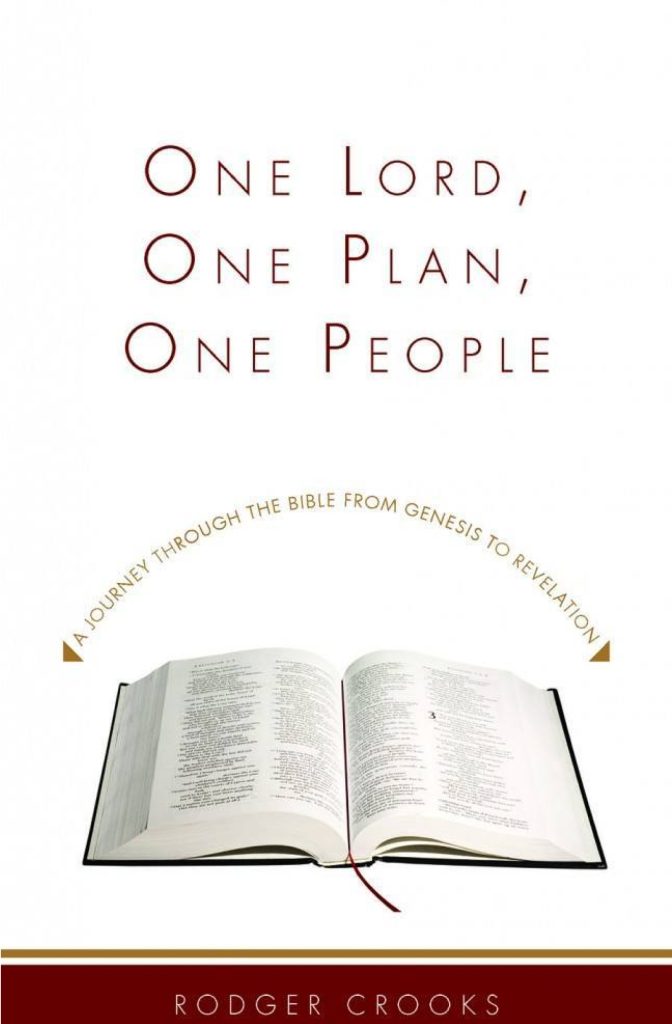
One Lord, One Plan, One People by Roger Crooks is a book that tries to step back and take in the whole shape of the Bible, not just in parts but as a unified story. It’s not aiming to be technical or overly academic. The tone is more pastoral and explanatory, trying to help ordinary readers see how Scripture fits together and why that matters for how the Christian life is understood.
The central claim is straightforward but weighty: God has one Lord over all, one unfolding plan of redemption, and one people that he is gathering to himself. Crooks spends much of the book tracing that thread across both the Old and New Testaments. Rather than treating the Bible as a collection of disconnected episodes, he presents it as a continuous narrative that moves from creation, through promise, through fulfilment in Christ, and on toward final restoration.
A significant portion of the book is concerned with the relationship between Israel and the church. Crooks argues strongly for continuity. The people of God are not replaced or restarted in the New Testament, but brought to fulfilment. The promises made in the Old Testament find their “yes” in Christ and are shared by all who belong to him. That means the church is not a separate plan or a temporary arrangement, but the continuation and fulfilment of what God has always been doing.
There is a clear emphasis on covenant throughout. Crooks traces how God relates to his people through covenant promises, and how those promises develop across Scripture. The covenants are not treated as isolated agreements, but as connected stages within one larger purpose. This gives the book a steady structure. It moves through Scripture in a way that helps the reader see both progression and unity without losing either.
Christ sits firmly at the centre of the whole. The “one plan” is not simply a sequence of events, but a purpose focused on redemption through Jesus. The Old Testament is shown to anticipate him in various ways, while the New Testament reveals him more fully. Crooks is keen to show that without Christ, the Bible’s story remains incomplete and difficult to fully grasp.
The book is written with clarity rather than complexity. It does not assume advanced theological training, but it also does not reduce things to slogans. There is a steady attempt to let Scripture speak and to build conclusions from the text. At times, it feels like the book is trying to give readers a framework they can carry into their own Bible reading, rather than simply delivering information to be absorbed and left behind.
Overall, this is a book about coherence. It is trying to show that the Bible holds together because God himself is consistent in his purposes. That coherence is not just an intellectual point—it shapes how Christians understand their identity, their place in God’s plan, and their confidence in his promises.
What did you find most interesting? What did you takeaway from it?
One of the most interesting aspects of the book is how it brings a sense of continuity to parts of the Bible that can often feel distant or disconnected. Many Christians are familiar with key moments—Abraham, Moses, David, the exile—but may not always see how those moments relate directly to the life of the church today. Crooks helps bridge that gap. He shows that these are not just historical accounts but stages in the same story that believers are now part of.
That has a steadying effect. It gives weight to the Old Testament in a way that goes beyond moral lessons or background context. The takeaway is that the Old Testament is not simply preparation for the gospel—it is part of the gospel story itself, pointing forward and laying the groundwork for what is fulfilled in Christ.
Another thing that stands out is the emphasis on identity. If there is truly “one people,” then Christians today are not disconnected from what came before. They are part of a long, unfolding work of God. That reshapes how passages about promise, inheritance, and covenant are read. It encourages a deeper sense of belonging—not just to a local church, but to the whole people of God across time.
The book also brings clarity to the idea of God’s plan. It is easy to think of the Bible as a series of divine responses to human failure, almost as if God is adjusting course along the way. Crooks pushes against that. He presents a picture of a God who is consistently working out a purpose that was always intended, even as it unfolds through real history and real human weakness. That strengthens confidence in Scripture as a whole. It feels less fragmented and more purposeful.
There is also a helpful simplicity in how the book frames things. The title itself becomes a kind of lens: one Lord, one plan, one people. It is not an oversimplification, but it is memorable. It gives readers something to hold onto as they move through different parts of the Bible. That kind of clarity is valuable, especially for those who feel overwhelmed by the scale and complexity of Scripture.
The main takeaway is that understanding the unity of the Bible is not just about getting theology right—it shapes how the whole Christian life is viewed. It affects how promises are trusted, how commands are understood, and how the church sees itself in relation to God’s purposes.
How were you challenged?
This book challenges the tendency to read the Bible in isolated sections. It is very easy to focus on familiar passages, favourite books, or well-known themes, while leaving large portions of Scripture relatively unexplored or disconnected. Crooks presses against that habit by showing that each part belongs to a larger whole. That raises the question of whether Bible reading is shaped more by preference than by a desire to understand the full scope of God’s word.
It also challenges assumptions about identity. If the church is truly part of the same people of God described throughout Scripture, then that carries weight. It means that the story of Israel is not just “their story,” but in a real sense part of “our story.” That can feel unfamiliar, especially in contexts where the Old Testament is not often emphasised. The book pushes the reader to reconsider how closely connected those things really are.
There is also a challenge in how God’s plan is understood. The book calls for a deeper trust in the coherence of Scripture, even in places that are difficult to follow. Rather than skipping over complex sections or treating them as less relevant, it encourages patience and careful reading. That can feel demanding, especially for those used to quicker, more immediately applicable approaches to the Bible.
For those who have inherited certain theological frameworks—particularly around the relationship between Israel and the church—the book may also be stretching. Crooks presents a clear view, and while it is argued calmly, it does press the reader to think carefully about positions that may have been assumed rather than examined.
On a more personal level, the book challenges how believers see their place in God’s purposes. If there is one plan unfolding, then the Christian life is not random or disconnected. It is part of something much larger. That can be both encouraging and searching. It invites a bigger view of faithfulness—not just in terms of individual growth, but in relation to God’s long-term work in the world.
Why should someone else read it?
This is a helpful book for anyone who feels that the Bible can sometimes seem fragmented or difficult to piece together. It provides a framework that brings clarity without requiring specialist knowledge. For newer Christians, it can serve as a guide to understanding how the different parts of Scripture relate. For more established believers, it can deepen and sharpen existing understanding.
It would be particularly useful in church settings where there is a desire to strengthen biblical literacy. Small groups, discipleship contexts, or teaching series could benefit from the kind of overview the book provides. It gives people a shared language and structure for thinking about Scripture as a whole.
Those interested in biblical theology will also find it worthwhile. While it is not as detailed as some more academic works, it captures many of the same themes in a more accessible way. It can act as a stepping stone into deeper study, or simply as a clear and steady introduction.
At the same time, it is a book that rewards slow reading. It is not trying to impress with complexity, but it does require attention. The value comes from following the argument through Scripture and allowing the connections to build over time.
In the end, One Lord, One Plan, One People is a reminder that the Bible is not a loose collection of spiritual writings, but a unified revelation of God’s purposes. For churches that want to grow in their understanding of Scripture as a whole, this book offers a helpful and grounded starting point.