
Book Overview
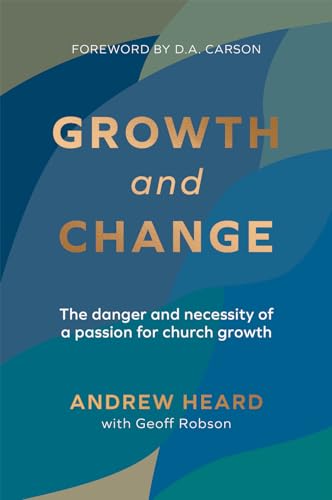
Growth and Change by Andrew Heard is a book that sits very squarely in the world of local church ministry, particularly in contexts that are already committed to Bible teaching and gospel clarity. It doesn’t try to reinvent ministry or introduce something novel. Instead, it takes a step back and asks a more uncomfortable question: why do churches that are doctrinally sound and committed to Scripture often struggle to see lasting growth—both in numbers and in maturity?
Heard’s answer is not quick or simplistic. The book works through the idea that real growth—what he would call gospel growth—is shaped by both faithfulness to God’s word and thoughtful, intentional change in how ministry is actually carried out. That pairing is important. He is not arguing for change for its own sake, nor is he suggesting that faithfulness alone automatically leads to fruitfulness in every circumstance. Instead, he tries to hold those two things together without letting either slip.
A key emphasis throughout the book is that growth should be expected. Not demanded in a mechanical way, but expected as something God ordinarily brings about through the faithful proclamation of the gospel. That expectation shapes the tone of the whole book. It pushes against a kind of quiet resignation that can settle into churches—where lack of growth is explained away too easily or accepted without much reflection.
At the same time, Heard is careful to define what kind of growth matters. It is not simply about numbers or external success. Growth includes conversion, yes, but also depth, maturity, and increasing Christlikeness within the church. The book repeatedly brings the reader back to the idea that both kinds of growth belong together. A church that grows numerically without depth is not healthy, but neither is a church that prides itself on depth while remaining stagnant in mission.
Structurally, the book moves between theological reflection and practical application. Heard looks at biblical patterns, especially in the New Testament, and then asks how those patterns should shape modern church life. He addresses areas like leadership, structures, decision-making, and ministry priorities, always with the question in view: are these things helping or hindering gospel growth?
There is also a noticeable realism in the book. Change is not presented as easy. Churches are made up of people, traditions, histories, and expectations. Adjusting direction, even for good reasons, can be slow and sometimes painful. Heard does not ignore that. Instead, he tries to give a framework for thinking wisely about when change is needed and how it can be pursued without losing what matters most.
The tone is direct but not harsh. It feels like the kind of book written by someone who has spent a long time in real church settings, seen both fruit and frustration, and wants to help others navigate that tension with clarity and patience.
What did you find most interesting? What did you takeaway from it?
One of the most interesting aspects of Growth and Change is how it refuses to let churches settle into easy explanations for lack of growth. It gently but firmly challenges the instinct to assume that if a church is faithful, then whatever happens must simply be accepted without question. Heard does not deny God’s sovereignty, but he also does not allow it to become a reason for passivity.
That creates a helpful tension. The takeaway is that faithfulness and fruitfulness are not opposites. Churches should be deeply committed to Scripture and at the same time willing to examine whether their current practices are actually serving the mission they believe in. That kind of self-examination can be uncomfortable, but it is necessary.
Another thing that stands out is the emphasis on intentionality. Growth is not treated as something that happens accidentally. It is something that churches should prayerfully pursue, thinking carefully about how their time, energy, and resources are being used. That includes asking quite practical questions: Are leaders focused on the right things? Are structures helping or slowing things down? Are people being equipped for ministry, or just attending it?
There is also a strong takeaway around clarity of purpose. Churches can easily become busy with many good activities that are not clearly aligned with making disciples. Heard pushes for a sharper focus. Not everything needs to be done. Not every tradition needs to be maintained. The key question is whether what is being done is actually contributing to gospel growth.
The book also highlights how difficult change can be. That in itself is helpful. It avoids giving the impression that if a church simply adopts the right strategy, growth will follow quickly. Instead, it acknowledges that change often involves rethinking long-standing patterns, having difficult conversations, and exercising patience over time.
A broader takeaway is that leadership matters deeply. The direction, priorities, and willingness of leaders to evaluate and adjust will shape the whole church. That is not presented as a call to control, but as a responsibility to guide wisely.
How were you challenged?
This book challenges the tendency to equate busyness with effectiveness. Many churches are active, with full calendars and committed people, but that activity does not always translate into growth. Heard presses on whether that activity is actually aligned with the church’s core mission, or whether it has become an end in itself.
It also challenges a passive view of ministry. It is easy to fall into a mindset where growth is entirely left to God in a way that removes human responsibility. While affirming God’s sovereignty, the book calls for active, thoughtful engagement. It raises the question of whether there has been a reluctance to evaluate and change because it feels uncomfortable or risky.
For leaders, the challenge is particularly sharp. It asks whether leadership is willing to make difficult decisions for the sake of long-term health. That might include letting go of certain programmes, reshaping roles, or redirecting energy. Those decisions are rarely easy, especially when they affect people’s expectations or long-held traditions.
There is also a challenge around honesty. The book encourages churches to look clearly at where they are, rather than where they assume they are. That includes being willing to acknowledge stagnation or lack of fruit without immediately justifying it.
On a personal level, the book challenges how individuals think about their role in the church. Are they contributing to gospel growth, or simply participating in church life? That question shifts the focus from attendance to involvement in the mission.
Why should someone else read it?
Growth and Change is especially helpful for church leaders—pastors, elders, and ministry leaders—because it speaks directly into the realities they are navigating. It provides a framework for thinking about growth that is both biblical and practical, without reducing everything to technique.
It would also be valuable for leadership teams to read together. The book raises questions that are best worked through collectively, particularly when it comes to evaluating current practices and considering potential changes.
Church members who are invested in the life of their church would benefit as well. It helps them understand why certain decisions might be made and how growth should be thought about more broadly.
It is particularly useful in seasons where a church feels stuck or uncertain about direction. The book does not offer quick fixes, but it does provide clarity that can help move conversations forward.
At the same time, it is a book that needs to be read carefully. There is always a risk of taking the call to change and applying it too quickly or without sufficient wisdom. Heard’s emphasis is not on constant change, but on thoughtful, purposeful adjustment in service of gospel growth.
In the end, this is a steady and grounded book that helps churches think more clearly about what they are doing and why. It calls for faithfulness, but also for courage—the courage to evaluate, to adjust, and to pursue growth with both conviction and humility.