
Book Overview
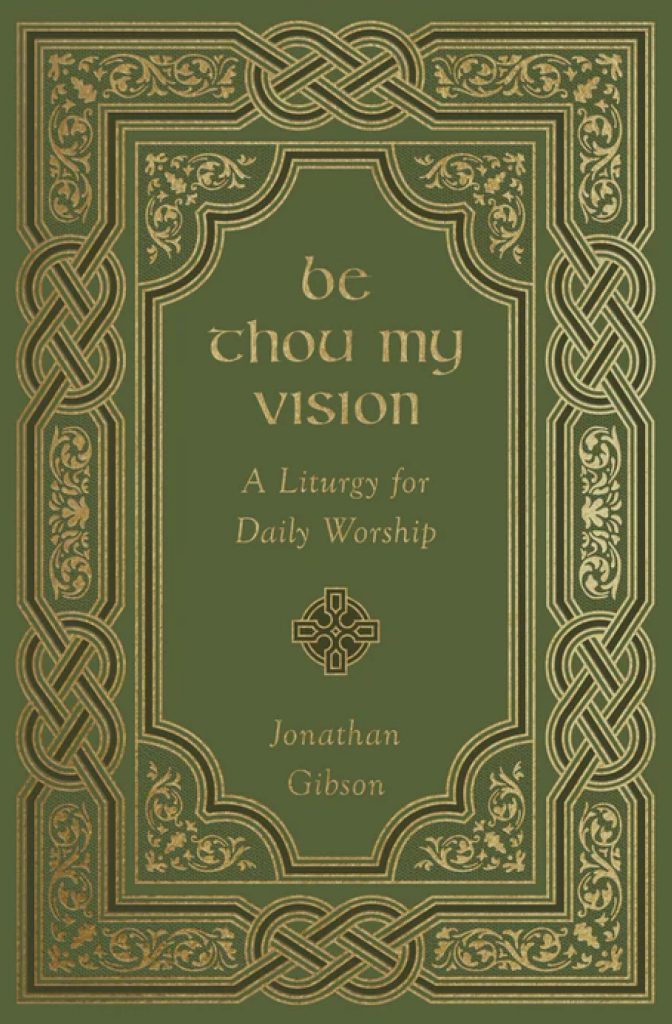
Be Thou My Vision by Jonathan Gibson is a carefully compiled devotional that centres on preparing the heart for gathered worship, particularly the Lord’s Day. It is not a typical daily devotional that moves loosely through topics or themes. Instead, it is structured with a clear purpose—to help Christians approach Sunday with greater intentionality, reverence, and spiritual readiness.
The book is organised into weekly cycles, with readings designed for each day leading up to Sunday, along with material for the day itself. That structure is one of its most distinctive features. Gibson is not simply offering helpful thoughts for individual growth; he is trying to shape a rhythm of life that builds toward corporate worship. The underlying conviction is that Sunday does not begin when the service starts. It is something that should be prepared for throughout the week.
Each day includes Scripture, a short reflection, and a prayer drawn from a wide range of historical Christian sources—Puritans, Reformers, and others. That gives the book a particular depth. It is not driven by contemporary tone or style, but by a rich, historic spirituality that feels weighty without being inaccessible. There is a sense that the reader is being invited into a broader tradition of Christian devotion, one that has long taken seriously the preparation of the heart.
Theologically, the book is clearly Reformed, with a strong emphasis on God’s holiness, human sinfulness, the sufficiency of Christ, and the necessity of grace. That shapes both the tone and the content. There is a consistent movement from confession to assurance, from weakness to dependence, from distraction to focus. Worship is presented not as a casual gathering, but as an encounter with the living God—something that calls for both joy and reverence.
One of the strengths of the book is its consistency. The structure repeats week by week, but rather than becoming stale, it builds a kind of steady rhythm. Over time, that repetition begins to form habits—of reflection, of prayer, of anticipation. It slows things down in a helpful way, pushing against the hurried and often distracted pace of modern life.
Overall, Be Thou My Vision is not trying to be innovative. It is trying to be formative. It helps reframe how the week is lived in light of the Lord’s Day, and how the Lord’s Day is approached in light of who God is.
What did you find most interesting? What did you takeaway from it?
One of the most interesting aspects of the book is its insistence that preparation for worship is not something that happens in a few minutes before a service. That idea alone is quite searching. Many are used to arriving at church and only then beginning to shift mentally and spiritually. Gibson stretches that perspective across the whole week.
That creates a different kind of rhythm. The takeaway is that worship becomes something anticipated rather than simply attended. Each day’s reading gently reorients the heart, so that by the time Sunday arrives, there is already a sense of readiness. It is not perfect or complete, but it is intentional.
Another striking feature is the use of historic prayers. These are not casual or conversational in tone. They are often weighty, carefully worded, and deeply theological. At first, that can feel slightly unfamiliar. But over time, they begin to shape how prayer is thought about. They bring a depth that is sometimes missing in more spontaneous expressions.
There is also a strong emphasis on confession and humility. The book does not rush quickly to encouragement without first dealing honestly with sin and need. That order is important. It gives the assurance of grace a deeper foundation. The takeaway is that true joy in worship is not built on ignoring sin, but on bringing it into the light and receiving forgiveness.
The structure itself becomes part of the takeaway. The repetition of themes—God’s holiness, human weakness, Christ’s sufficiency—begins to settle more deeply over time. It is not about new insights every day, but about reinforcing what is already true.
More broadly, the book highlights how easily the Lord’s Day can lose its weight. In many contexts, Sunday can feel like just another part of the week, squeezed in among other commitments. Gibson helps recover a sense that it is distinct—not in a legalistic way, but in a way that reflects its significance.
How were you challenged?
This book challenges the casual approach that can easily develop toward corporate worship. It raises the question of whether enough thought is given to how the heart is prepared. Is Sunday something that is drifted into, or something that is consciously moved toward?
It also challenges the pace of life. The kind of preparation the book encourages requires time and attention. It does not fit easily into a hurried schedule where spiritual reflection is squeezed into small gaps. That exposes how often other priorities crowd out what should be central.
There is also a challenge in the tone of the prayers and reflections. They are more weighty and structured than what many are used to. That can initially feel distant, but it also reveals how easily prayer can become shallow or repetitive. The book invites a deeper engagement, both in thought and in language.
The emphasis on confession can be particularly searching. It is easy to move quickly past sin or to deal with it in a general way. Gibson slows that down, encouraging a more honest and specific approach. That can be uncomfortable, but it also makes the assurance of grace more meaningful.
For those involved in leading worship or preaching, there is an added layer of challenge. If the Lord’s Day carries this kind of weight, then how it is approached and led matters deeply. It is not about creating an experience, but about faithfully guiding people into the presence of God through his word.
Why should someone else read it?
Be Thou My Vision is especially helpful for Christians who feel that Sundays have become routine or lacking in depth. It provides a practical way of reintroducing intentionality and focus.
It would also be valuable for those who want to develop more consistent devotional habits. The weekly structure offers a clear framework that is easy to follow, without being overly rigid.
Church leaders and those involved in service planning would benefit as well. The book offers insight into how the elements of worship can be approached with greater thought and care, even if its exact structure is not replicated.
It is particularly suited for those who appreciate historic Christian writings. The inclusion of older prayers and reflections gives it a richness that sets it apart from many modern devotionals.
At the same time, it may require some adjustment. The tone is more formal, and the pace is slower than what many are used to. But that is part of its value. It invites a different kind of engagement—one that is more deliberate and less driven by immediacy.
In the end, this is a book that helps recover a sense of preparation, reverence, and anticipation. It does not try to transform Sunday into something new, but to help it be seen for what it already is: a central, weighty, and grace-filled part of the Christian life.