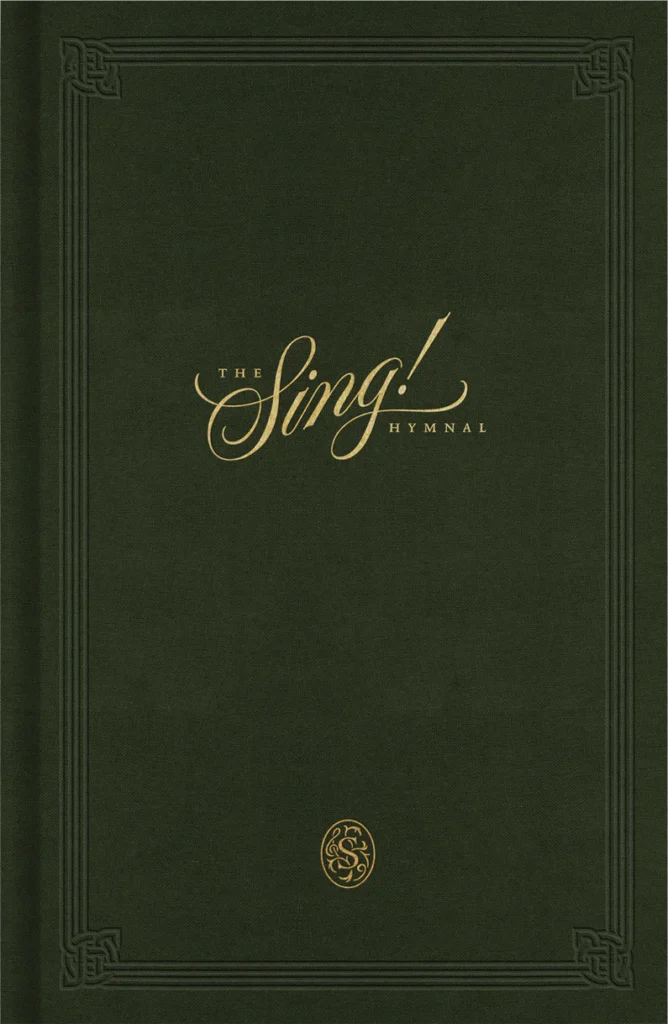

Book Overview
Sing! How Worship Transforms Your Life, Family, and Church by Keith and Kristyn Getty sets out to recover something that has quietly slipped in many churches: the central, shaping role of congregational singing. The book isn’t written as a technical manual on music, nor as a narrow defence of a particular style. Instead, it makes a broader and more pastoral case—singing is not an optional extra in Christian life, but a God-given means of grace that forms believers deeply over time.
The Gettys write out of long experience in church music, but the tone remains accessible and grounded. There’s a clear concern not just for Sunday gatherings, but for the whole shape of Christian discipleship. Singing is presented as something that reaches into the heart, reinforces truth, and binds the church together in ways that few other practices can. The book moves across different contexts—personal devotion, family life, corporate worship—showing how singing operates in each.
A key strength is the way it ties singing directly to Scripture. This isn’t framed as preference or tradition, but as obedience. The Bible’s repeated calls to sing are taken seriously, and the authors help draw out why God would command something like this. Singing becomes not just expression, but formation. It teaches doctrine, strengthens faith in suffering, and anchors believers in truth when emotions are unsteady.
There’s also a noticeable pastoral warmth throughout. The authors aren’t scolding churches for getting things wrong, but gently pressing toward something richer. At times, there’s an undercurrent of concern that modern evangelicalism has, in some places, reduced singing to performance or background atmosphere. Without becoming overly critical, the book calls for a recovery of robust, truth-filled, congregational song.
What did you find most interesting? What did you takeaway from it?
What did you find most interesting and what did you takeaway from it?
One of the more striking threads running through the book is the idea that singing lodges truth in the heart in a way that spoken words alone often do not. That’s not a new idea, but the Gettys make it feel freshly important. They show how songs stay with people—through illness, ageing, even memory loss—when other things fade. That gives weight to what the church chooses to sing. It’s not just about what sounds good in the moment, but what will endure in the life of a believer.
Another helpful aspect is how the book broadens the conversation beyond Sunday services. Singing in the home is given real attention, which feels both simple and quietly challenging. The picture painted is not one of polished family worship, but something more ordinary—singing around the table, teaching children songs of the faith, letting truth become part of the rhythm of daily life. It brings a sense that worship is not confined to a building or a time slot.
The emphasis on unity also stands out. Congregational singing is shown as one of the few moments where the whole church actively participates together. In a culture that often leans toward individual experience, this shared voice matters. Singing the same truths, at the same time, helps shape a shared identity. That’s easy to overlook, but the book brings it back into focus in a compelling way.
There’s also a quiet insistence that singing is for everyone. Not just the musically gifted, not just those who feel confident. That push is important, especially in churches where people can drift into passivity. The reminder that God commands all his people to sing cuts through excuses in a gentle but firm way.
How were you challenged?
The book raises some uncomfortable questions about how lightly singing can be treated. It’s easy to think of it as the part of the service that leads into something else—the sermon, perhaps—rather than something that stands in its own right as ministry. This book doesn’t allow that kind of thinking to remain unexamined.
There’s also a challenge around intentionality. What is being sung, and why? Are the songs rich in truth, or are they thin and repetitive? Do they reflect the breadth of the Christian life—joy, lament, hope, repentance—or do they stay in a narrow emotional range? The Gettys don’t turn this into a harsh critique, but the implication is clear: what a church sings will shape what it believes, over time.
On a personal level, the call to sing outside of church settings can feel stretching. It exposes how compartmentalised worship can become. Singing in private or in family settings doesn’t always come naturally, and the book gently presses into that reluctance. It invites a rethinking of what normal Christian life looks like.
There’s also a subtle challenge around engagement. It’s possible to be physically present during singing but mentally elsewhere. The book calls for something more wholehearted—for voices that are not just heard, but engaged with truth. That’s a harder thing to cultivate than it might seem.
Why should someone else read it?
This is a helpful book for anyone who has started to feel that singing in church has become routine or unclear in purpose. It brings clarity without becoming technical, and conviction without becoming heavy-handed. For church members, it deepens appreciation for something that happens every week. For leaders, it offers a framework for thinking more carefully about how singing functions within the life of the church.
It would be especially useful in churches wanting to strengthen congregational participation. The book doesn’t offer quick fixes, but it does reshape how singing is understood. That alone can begin to change things over time.
It also serves well as a reminder that worship is not primarily about personal preference or musical style. Those conversations tend to dominate, but the Gettys redirect attention to something more foundational—truth, formation, and obedience. That shift is both needed and refreshing.
More broadly, the book helps recover a sense of joy and seriousness around singing. Not in a forced way, but in a way that feels rooted and realistic. It doesn’t pretend that every moment of singing will feel powerful, but it does show why it matters even when it doesn’t.