
Book Overview
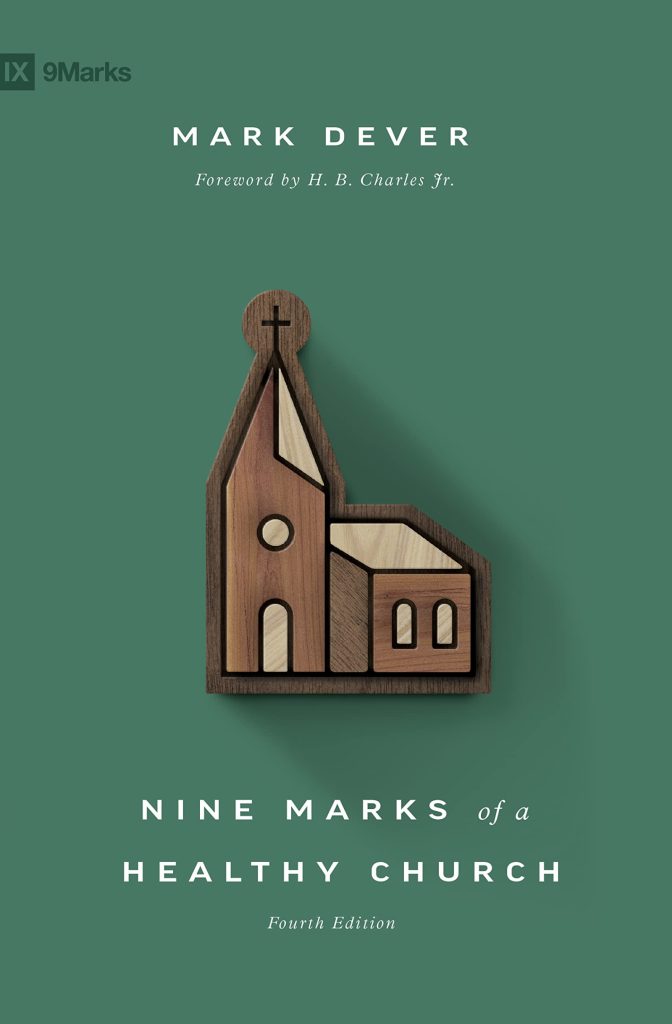
Nine Marks of a Healthy Church (Fourth Edition) by Mark Dever is one of those books that has quietly shaped a lot of evangelical church life over the past couple of decades. It’s not flashy, and it doesn’t try to be. The aim is straightforward: to describe what a biblically healthy church looks like, using Scripture rather than trends or cultural expectations as the guide.
The “nine marks” themselves are not presented as a checklist to mechanically apply, but as a set of biblical characteristics that should increasingly be visible in a church that is ordered according to God’s word. They are: expositional preaching, biblical theology, a right understanding of the gospel, a biblical understanding of conversion, evangelism, church membership, church discipline, discipleship, and biblical church leadership. Each of these is given space, and Dever works through them with a steady, text-driven approach.
One of the defining features of the book is its insistence that the health of a church is not measured by size, activity, or cultural influence, but by faithfulness to Scripture. That immediately sets it apart from much of the wider conversation around church growth. Dever is not uninterested in growth, but he is careful to define it in terms of spiritual maturity and gospel clarity rather than numbers alone.
The fourth edition reflects some updating and refinement, but the core message remains consistent. If anything, it feels more settled. The book has had time to be tested in real church contexts, and that shows in the tone. It is not defensive, but it is clear. It does not feel like a new proposal, but like a framework that has proven its usefulness over time.
There is also a strong pastoral undercurrent. While the book is structured around distinct “marks,” it does not read like a manual. Dever regularly brings things back to the life of the local church—to real people, real preaching, real relationships. The marks are not abstract principles; they are meant to shape the day-to-day life of a congregation.
Theologically, the book is firmly rooted in a Reformed evangelical framework, with a high view of Scripture and a strong emphasis on the authority of God’s word in shaping church life. That comes through especially in the priority given to preaching and doctrine. The church is formed by the word, and everything else flows from that.
Overall, Nine Marks of a Healthy Church is about re-centering. It calls churches away from borrowed measures of success and back to the Bible’s own priorities. It is not trying to make churches impressive. It is trying to make them faithful.
What did you find most interesting? What did you takeaway from it?
One of the most striking things about the book is how it reshapes what “health” means in a church context. It is very easy to assume that a busy, growing, well-attended church is a healthy one. Dever gently but firmly pushes against that assumption. The marks he outlines are often less visible and less immediately measurable, but far more significant over time.
The emphasis on expositional preaching stands out early and sets the tone for everything else. The idea is simple: if God’s word shapes the church, then it needs to be clearly and consistently explained in context. That might sound obvious, but the book makes it clear how easily preaching can drift toward topical, selective, or personality-driven approaches. The takeaway is that faithful preaching is not just one part of church life—it is foundational.
Another key takeaway is how interconnected the marks are. They are not independent features that can be developed in isolation. A right understanding of the gospel shapes how conversion is understood. That, in turn, affects how membership is practiced, how discipline is handled, and how discipleship takes place. The book helps the reader see that when one area is weak, it often has a knock-on effect elsewhere.
The sections on church membership and discipline are particularly memorable, partly because they address areas that are often neglected or misunderstood. Dever presents them not as harsh or outdated practices, but as expressions of love and clarity. Membership defines who the church is, and discipline protects that identity. That reframing is helpful, even if it challenges common assumptions.
There is also a strong takeaway around intentional discipleship. Growth is not left to chance. Churches are called to actively help one another follow Christ, which requires time, relationships, and deliberate investment. That connects closely with the earlier marks, showing that doctrine and practice are not separate tracks.
More broadly, the book leaves the impression that healthy churches are shaped over time through ordinary, consistent faithfulness. There is nothing particularly novel or innovative about the marks themselves. That is part of the point. The power lies in returning to what Scripture has already given.
How were you challenged?
This book challenges the tendency to evaluate church life using surface-level indicators. It raises the uncomfortable possibility that a church can appear successful while lacking key elements of biblical health. That invites a more careful and sometimes more honest assessment.
It also challenges the way preaching is approached. If expositional preaching is truly central, then it requires commitment—not just from the preacher, but from the congregation as well. It calls for patience, attentiveness, and a willingness to sit under the whole counsel of God’s word, not just familiar or preferred topics.
The sections on membership and discipline are likely to be among the more stretching parts of the book for many readers. In a culture that values individual autonomy, the idea of defined membership and accountable relationships can feel restrictive. Dever challenges that by showing their biblical basis and their role in fostering genuine community and holiness.
There is also a challenge for leaders in how they think about success. It is easy to be drawn toward visible results, especially in a culture that celebrates growth and influence. The book calls leaders to prioritise faithfulness, even when it is slower, less visible, or less immediately rewarding.
On a personal level, the book challenges how individuals view their role in the church. Membership is not passive. Discipleship is not optional. There is a call to be actively involved in the life of the body, contributing to the growth of others as well as one’s own.
Why should someone else read it?
Nine Marks of a Healthy Church is particularly valuable for pastors and church leaders, as it provides a clear and biblical framework for thinking about church health. It helps set priorities and offers a way of evaluating ministry that is grounded in Scripture rather than trends.
It would also be beneficial for leadership teams to read together. The book provides a shared language and set of categories that can help guide discussions about direction, structure, and practice.
Church members would benefit as well, especially those who want to understand why their church does what it does—or why it might need to change. The book helps broaden the understanding of what church life is meant to look like and invites deeper engagement.
It is also a useful book for those considering church planting or involved in revitalisation. The marks provide a framework that can guide both starting well and correcting course where needed.
At the same time, it is worth reading with patience. The book does not offer quick fixes or easy solutions. Some of the changes it points toward are slow and require careful, wise implementation. But that is part of its strength. It is aiming for lasting health, not immediate results.
In the end, this is a book that continues to be relevant because it keeps pointing back to Scripture. It does not try to compete with the latest ideas about church growth. It simply asks what God has said about his church—and then takes that seriously. For any church wanting to be shaped more clearly by the Bible, that is a worthwhile place to start.