
Book Overview
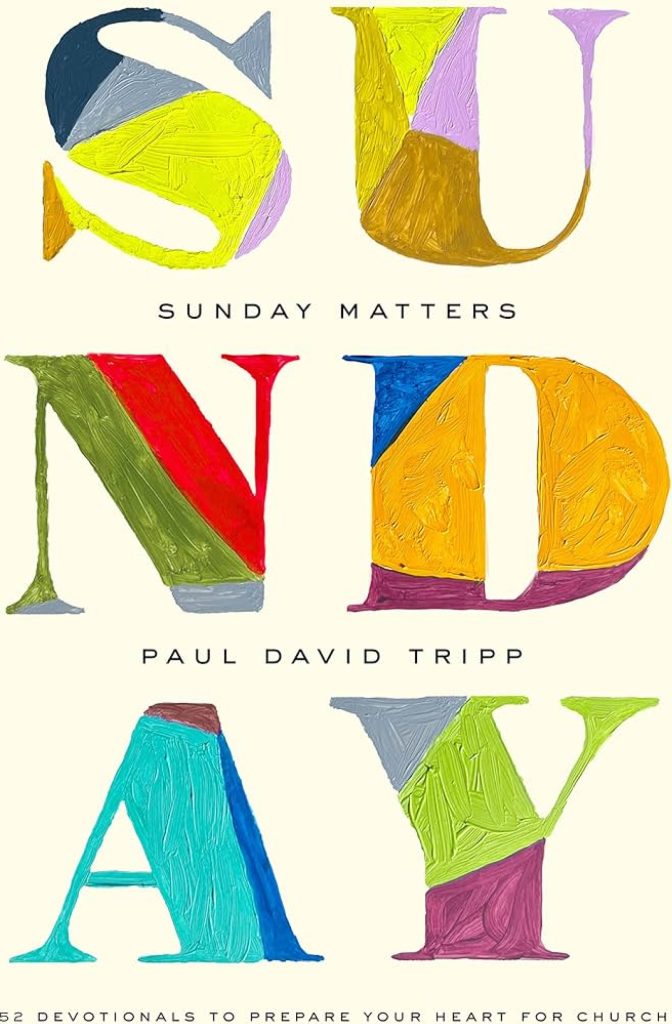
Sunday Matters (often simply referred to as Sunday) by Paul David Tripp is a book that seeks to recover a right understanding of the gathered worship of God’s people. It’s not primarily about techniques, liturgy styles, or service formats. Instead, Tripp is asking a deeper question: what is actually happening when the church gathers on a Sunday, and why does it matter so much for the Christian life?
At the heart of the book is the conviction that corporate worship is one of God’s primary means of grace. Sunday is not just a weekly habit or a helpful boost for the week ahead. It is a central part of how God forms, shapes, corrects, and encourages his people. Tripp pushes back against the tendency to treat church attendance casually or consumeristically, where the focus becomes what is gained or felt rather than what God is doing through his ordained means.
The book is structured around elements of a typical church gathering—singing, prayer, preaching, the Lord’s Supper, fellowship—and Tripp unpacks each of these not just as activities, but as spiritually significant encounters. He wants readers to see that each part of the service is designed by God to do something in the hearts of his people. Singing is not just expression, but formation. Preaching is not just information, but transformation. The Lord’s Supper is not just remembrance, but participation in grace.
There is a strong emphasis throughout on the heart. Tripp is less concerned with outward attendance and more concerned with inward posture. It is possible to be physically present every Sunday and yet spiritually disengaged. The book repeatedly calls readers to examine how they come to church—whether with expectation, humility, and readiness to hear from God, or with distraction, familiarity, and low expectation.
The tone is very pastoral, which is typical of Tripp. He writes with a kind of urgency, but not in a rushed or aggressive way. There is a steady sense that this really matters. He is not trying to win an argument about church practice. He is trying to wake readers up to something they may have slowly drifted from.
Theologically, the book is grounded in a strong view of Scripture and God’s sovereignty in using ordinary means. Tripp consistently brings things back to the idea that God works through what might seem simple or routine. That includes the weekly gathering of his people. What looks ordinary on the surface is, in reality, deeply significant.
Overall, Sunday Matters is about re-seeing something familiar. It takes what can easily become routine and shows its weight, its purpose, and its place in the Christian life.
What did you find most interesting? What did you takeaway from it?
One of the most striking things about the book is how it reframes the Sunday gathering from something attended to something participated in. It challenges the idea that church is mainly about receiving—whether that’s good teaching, good music, or a sense of encouragement. Instead, Tripp presents it as an active engagement with God and his people.
That shift is significant. It moves the focus away from personal preference and toward spiritual purpose. The takeaway is that the question is not “did I get something out of it?” but “how did God meet with his people through his word and his ordained means?”
Another helpful aspect is how the book highlights the formative power of repetition. Weekly gatherings can start to feel predictable, even routine. Tripp pushes against the idea that repetition equals stagnation. Instead, he shows that God uses repeated patterns—confession, assurance, teaching, singing—to shape hearts over time. Growth often happens slowly, almost unnoticed, through these steady rhythms.
There is also a strong emphasis on expectation. The book challenges the low-level assumption that Sundays are spiritually helpful but not essential. Tripp argues that when God’s people gather, something real is happening. God is at work through his word. That should shape how believers prepare for Sunday, how they engage during it, and how they reflect on it afterward.
Another takeaway is how interconnected the elements of the service are. It is easy to isolate preaching as the main event and treat everything else as secondary. Tripp resists that. He shows how each part contributes to the whole, creating a kind of spiritual ecosystem where God is working through multiple means at once.
There is also a helpful realism in the book. Not every Sunday will feel powerful or emotionally moving. Tripp acknowledges that. But he encourages readers not to measure the value of the gathering by immediate experience. God is still at work, even when it feels ordinary.
How were you challenged?
This book challenges the casual attitude that can easily develop toward church attendance. It is very easy to treat Sunday as one option among many, something to fit in around other commitments. Tripp presses on that by showing that the gathering is not optional in the way it is often treated. It is central to how God intends his people to grow.
It also challenges the consumer mindset. Many approach church, even subconsciously, asking whether it meets their needs or preferences. The book exposes how that mindset reshapes expectations in unhelpful ways. It turns worship into something evaluated rather than something entered into.
There is also a challenge around preparation. How often is Sunday approached without much thought beforehand? The book raises the question of whether there is intentional preparation—prayer, expectation, readiness to hear from God—or whether it is simply another part of the week.
For those who are regularly present but mentally distant, the book is particularly searching. It challenges the idea that attendance alone is enough. Engagement matters. Listening matters. Participation matters.
For leaders, there is also an implied challenge. If Sundays matter as much as the book suggests, then how they are structured and led carries real weight. It is not about creating impressive services, but about faithfully stewarding what God has given.
Why should someone else read it?
Sunday Matters is especially helpful for any Christian who feels that church has become routine or predictable. It provides a fresh perspective on something very familiar, helping to restore a sense of importance and expectation.
It would also be valuable for new believers, as it lays a strong foundation for understanding why the church gathers and what that gathering is meant to do.
Church leaders and service planners would benefit as well. The book provides a framework for thinking about the purpose behind each element of a service, which can help shape more intentional and meaningful gatherings.
It is also a helpful book for entire churches to work through together. Because it addresses shared practices, it can help create a more unified understanding of what Sundays are for.
At the same time, it is not a technical or prescriptive book. It does not offer detailed instructions on how to structure a service. Its strength lies in reorienting the heart and mind, rather than providing a blueprint.
In the end, this is a book that helps recover a sense of weight. It reminds the reader that what happens on a Sunday is not small or incidental. It is part of God’s ongoing work in his people. And that is something worth approaching with renewed attention and care.