
Book Overview
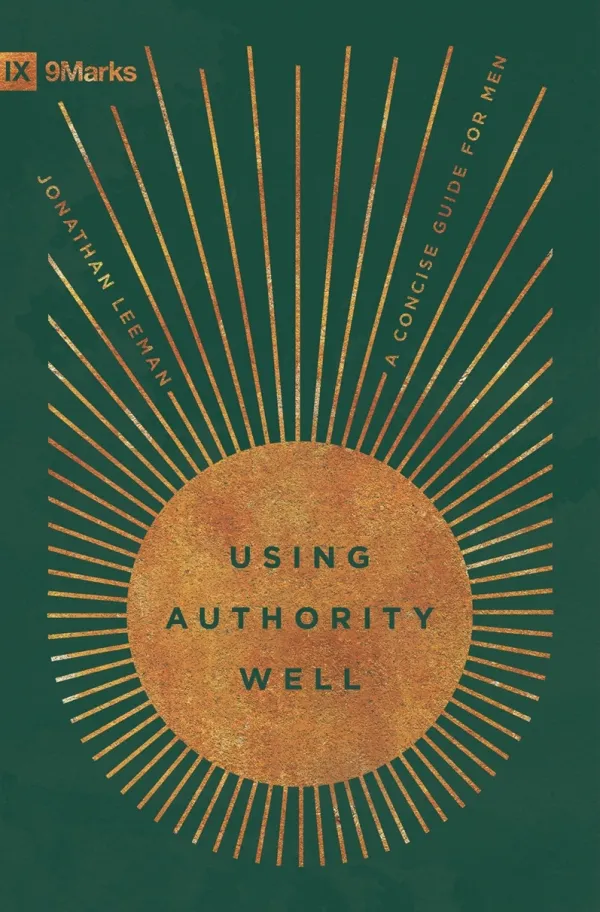
Using Authority Well by Jonathan Leeman is a careful and needed book on a subject that often feels either avoided or mishandled in church life. Authority is one of those themes that can quickly become uncomfortable. Some churches lean too heavily into it, creating environments that feel controlling or overly rigid. Others react against that by downplaying authority altogether, which can leave leadership weak and direction unclear. Leeman’s aim is to chart a more biblical path—one where authority is taken seriously, but handled with clarity, restraint, and a deep sense of accountability before Christ.
The book is rooted in a simple but important conviction: Jesus has all authority, and any authority exercised in the church is delegated and limited. That starting point shapes everything else. Leaders are not owners of the church. They are stewards. Their authority is real, but it is not self-generated. It comes from Christ and is bound to his word. That immediately places guardrails around how authority should be used. It cannot be arbitrary, personality-driven, or shaped by personal preference. It must be exercised in line with Scripture and for the good of God’s people.
Leeman spends time clarifying where authority in the church actually sits. One of the distinctive emphases of the book is the role of the congregation. Rather than placing all meaningful authority in the hands of elders or pastors, he argues that the gathered church has a real, God-given authority—particularly in matters like membership and discipline. Elders lead, teach, and oversee, but they do so within a structure where the congregation also carries responsibility. That balance is important in the book. It avoids both clericalism on one side and a kind of leaderless congregationalism on the other.
The tone throughout is calm and deliberate. This is not a reactive book, even though it is clearly aware of abuses of authority in church contexts. Leeman does not spend much time recounting failures or controversies. Instead, he focuses on building a positive, biblical framework. He wants readers to understand what authority is for, how it should function, and what it looks like when it is used well.
There is also a strong emphasis on the purpose of authority. It exists to build up, not to dominate. It is meant to protect the gospel, guard the church, and help believers grow in Christ. That gives authority a pastoral shape. It is not merely structural or organisational. It is relational and spiritual, aimed at the good of others rather than the elevation of the leader.
The book is not long, but it is quite dense in places. It draws carefully from Scripture and interacts with broader questions of church polity and leadership. While it is accessible, it does assume a willingness to think carefully about how churches are structured and how decisions are made.
Overall, Using Authority Well is about recovering a biblical vision of authority that is both strong and safe—strong enough to lead and protect, but safe enough to avoid the kinds of misuse that can harm individuals and undermine trust in the church.
What did you find most interesting? What did you takeaway from it?
One of the most interesting aspects of the book is how it reframes authority as something fundamentally good. In many contexts, authority is viewed with suspicion, often for understandable reasons. Leeman does not ignore those concerns, but he pushes back against the idea that the solution is to minimise authority as much as possible. Instead, he presents it as a gift from Christ to his church—something necessary for order, growth, and protection.
That shift is significant. It moves the conversation away from simply avoiding abuse and toward understanding purpose. The takeaway is that authority is not the problem; misuse of authority is. When exercised according to Scripture, authority can actually be a source of stability and care within the church.
Another striking feature is the emphasis on the congregation’s role. In many churches, authority is either concentrated in leadership or left vague. Leeman brings clarity by showing that the congregation itself has a meaningful part to play, particularly in recognising and affirming who belongs to the church. That broadens the understanding of responsibility. Church members are not passive recipients of leadership—they are participants in the life and accountability of the church.
There is also a helpful takeaway in how the book defines the limits of authority. Leaders are not given authority over every aspect of a person’s life. Their authority is tied to the teaching of Scripture and the life of the church. That creates important boundaries. It guards against overreach and helps maintain a clear distinction between pastoral care and personal control.
The book also highlights the connection between authority and the gospel. Authority is not an end in itself. It exists to serve the message of Christ—protecting it, proclaiming it, and shaping a community that reflects it. That keeps authority from becoming overly structural or abstract. It is always tied back to the mission of the church.
A broader takeaway is that healthy authority requires clarity. Many problems arise not from intentional misuse, but from confusion about roles, responsibilities, and expectations. By defining these more carefully, the book helps reduce that confusion and provides a framework for healthier church life.
How were you challenged?
This book challenges the instinct to avoid the topic of authority altogether. In some church settings, especially where there has been past hurt or misuse, there can be a reluctance to speak clearly about authority. Leeman presses against that by showing that avoiding the issue does not solve the problem. It often creates new ones, leaving leadership unclear and accountability weak.
It also challenges leaders to examine how they are using whatever authority they have. Are decisions being made transparently? Is Scripture clearly guiding those decisions, or are personal preferences creeping in? Is authority being used to serve others, or subtly to maintain control? These are not always easy questions, but the book brings them into focus.
For church members, there is a challenge as well. If the congregation has a real role in the life of the church, then that carries responsibility. It is not enough to simply attend or observe. There is a call to be engaged, to exercise discernment, and to take part in the shared life and accountability of the church.
The book also challenges assumptions about leadership strength. In some contexts, strong leadership is equated with decisiveness and control. Leeman reshapes that picture. Strength in leadership is shown not in how much control is exercised, but in how faithfully authority is aligned with Christ’s word and used for the good of others.
There is also a subtle challenge around trust. Healthy authority requires trust—both in leaders and in the structures God has given. That trust is not blind, but it is real. The book invites readers to consider whether their view of authority has been shaped more by negative experiences than by Scripture.
Why should someone else read it?
Using Authority Well is particularly valuable for pastors, elders, and anyone in church leadership. It provides a clear and biblical framework for thinking about authority, which is essential for leading well over time. It helps guard against both overreach and passivity, offering a balanced approach that is grounded in Scripture.
It would also be helpful for church members, especially those who want to better understand how their church functions. The book clarifies roles and responsibilities in a way that can strengthen trust and participation within the church.
For churches that have experienced tension or confusion around leadership, this book could serve as a useful resource for resetting expectations and opening up healthy conversations. It gives language to issues that are often felt but not clearly articulated.
It may also be particularly timely in a cultural moment where authority is often viewed negatively. The book offers a corrective that is both thoughtful and biblical, showing that authority, when used well, is not something to fear but something that serves the good of God’s people.
At the same time, it is not a quick or light read. It requires some careful thought, especially in how its principles are applied in different church contexts. But that is part of its value. It does not offer shortcuts, but a framework that can be worked through patiently.
In the end, this is a book that helps bring clarity to an area that is often either misunderstood or avoided. It calls for authority that is shaped by Christ, grounded in Scripture, and exercised with humility and care. For churches wanting to grow in health and trust, that is a conversation worth having.