
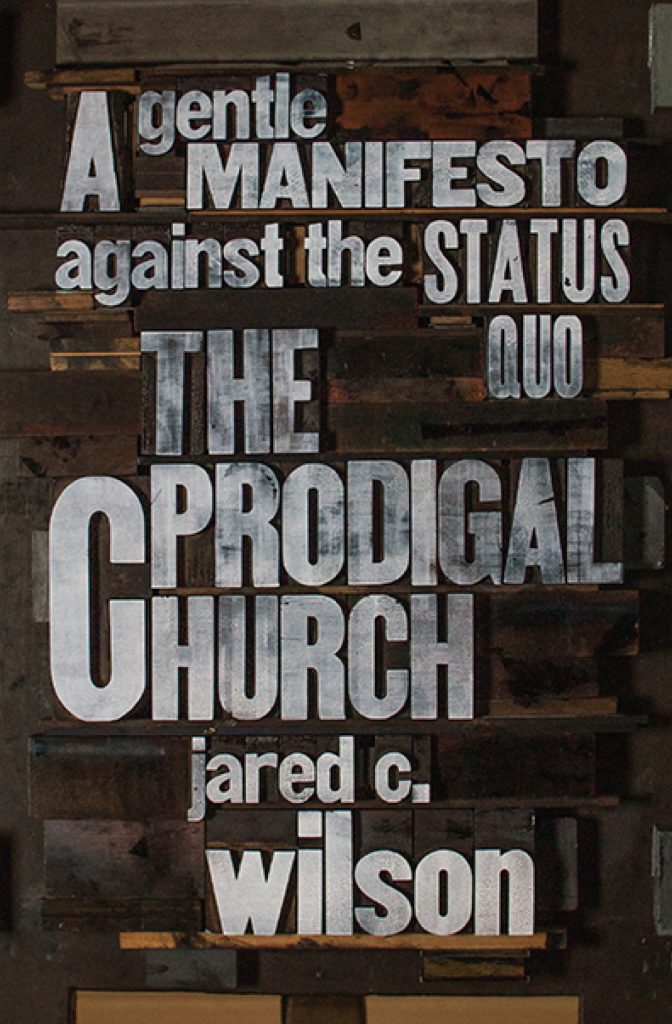
The Prodigal Church

Book Overview
The Prodigal Church by Jared C. Wilson is a book that tries to get underneath the surface of church life, especially in settings that would broadly identify as gospel-centred or evangelical. It’s not written as a critique from the outside. It feels much more like a diagnosis from within. The concern running through the book is that churches can speak often about grace, preach justification clearly, and emphasise the finished work of Christ—yet still operate with a functional mindset that leans heavily on performance, pressure, and subtle legalism.
Wilson uses the language of “prodigal” in a slightly unexpected way. Rather than simply retelling the familiar story of the younger son, he stretches the idea to describe churches that have, in different ways, wandered from a true grasp of grace. Some drift toward obvious licence, where grace becomes an excuse for looseness or a lack of seriousness about holiness. But more often, especially in conservative settings, the drift is toward a kind of elder-brother culture—outwardly faithful, doctrinally sound, but inwardly driven by comparison, pride, insecurity, or a quiet sense that God’s approval still needs to be earned or maintained.
The book is not trying to undermine the importance of obedience, holiness, or effort in the Christian life. In fact, it repeatedly affirms them. But it keeps returning to the question of motivation and source. Is obedience flowing from a settled confidence in God’s grace in Christ, or is it being driven by anxiety, reputation, or the need to prove something? That distinction becomes central, not just for individual believers, but for the tone and culture of entire churches.
Structurally, the book moves through a series of reflections on how grace can be subtly displaced. Wilson writes in a way that is quite accessible, sometimes almost conversational, but with enough theological clarity to keep things grounded. He draws on Scripture, pastoral observation, and a clear awareness of contemporary church culture—particularly the kind shaped by conferences, platforms, and visible ministry success.
One of the threads that runs throughout is the idea that churches can become “grace-oriented” in language but not in practice. Sermons may emphasise the gospel, but the lived experience of church life can still feel like a constant evaluation. People may know the right answers about grace but still carry a heavy sense of spiritual pressure. Leaders may intend to point people to Christ but unintentionally create environments where performance is quietly rewarded and weakness is hidden.
There is also a noticeable pastoral tone in the book. It is not written to score points or to provoke reaction for its own sake. It feels more like an appeal—an attempt to help churches rediscover the freedom and depth of grace not just as a doctrine to defend, but as a reality to live in. Wilson seems especially concerned that when grace is misunderstood or sidelined, churches do not just become stricter—they become less honest, less joyful, and less able to deal with real sin in a meaningful way.
Theologically, the book sits comfortably within a broadly Reformed evangelical framework. It assumes the centrality of the gospel, the seriousness of sin, and the necessity of new birth. But its emphasis is less on defining those doctrines and more on asking how they actually shape the life of a church. It is not trying to introduce something new. It is trying to recover something that is already confessed but not always deeply felt.
What did you find most interesting? What did you takeaway from it?
What stands out most in The Prodigal Church is how it names a tension that many people sense but struggle to articulate. There is often a gap between what churches say about grace and how people actually experience life within them. Wilson helps bring that gap into focus. He gives language to the quiet pressures that can build in church cultures that are, on paper, deeply committed to the gospel.
One of the most interesting aspects is the way the book exposes performance not just as a personal struggle, but as something that can be reinforced by the whole environment. It is not always imposed directly. It can be shaped by what gets celebrated, what gets noticed, and what quietly goes unspoken. A church might never explicitly teach that God’s love must be earned, but if visibility, productivity, and strength are consistently elevated, people will often draw that conclusion anyway.
The takeaway here is quite searching. It suggests that gospel clarity in preaching is not enough on its own. There needs to be a corresponding culture where grace is actually felt and seen. That includes how leaders respond to failure, how weakness is handled, how repentance is encouraged, and how ordinary faithfulness is valued. Without that, churches can unintentionally train people to hide their struggles and present a more polished version of themselves.
Another helpful takeaway is the book’s insistence that grace does not weaken holiness—it fuels it. That is a familiar theological claim, but Wilson presses it into practical territory. When people are secure in Christ, they are more able to face sin honestly, to repent without defensiveness, and to pursue growth without fear. By contrast, when grace is thin or assumed rather than applied, obedience can become brittle. It may look strong for a while, but it is often sustained by pressure rather than love.
The book also highlights how easily comparison can take root in church settings. Whether through ministry roles, perceived maturity, or visibility, it is very easy for believers to measure themselves against one another. That dynamic can quietly reshape relationships, making them less open and more guarded. Wilson’s emphasis on grace pushes against that by re-centring identity in Christ rather than in relative standing within the church.
There is also something quietly refreshing in how the book speaks about weakness. In many church cultures, weakness is acknowledged in theory but avoided in practice. The book encourages a different approach—one where weakness becomes a place where grace is actually experienced, rather than something to be covered over. That has significant implications for discipleship, accountability, and community life.
Overall, the main takeaway is that grace must move from being a theological foundation to being a lived atmosphere. It should shape not only what is preached, but how people relate, how leaders lead, and how the church understands growth. Without that, even well-taught churches can become spiritually exhausting places.
How were you challenged?
This book has a way of exposing subtle patterns that are easy to justify or overlook. One of the sharper challenges is around the tendency to measure spiritual health by outward markers. Attendance, involvement, theological precision, and visible service can all be good things. But the book presses on whether those things are being used, even quietly, as indicators of worth or acceptance.
That can be uncomfortable because those markers are often the ones churches naturally track. They are visible, measurable, and easy to report. But Wilson challenges the reader to consider whether those same markers might be shaping a culture where people feel they must keep up appearances. That raises difficult questions about what is actually being cultivated beneath the surface.
There is also a strong challenge around honesty. If a church truly believes in grace, it should be a place where sin can be confessed without fear of being sidelined or quietly judged. But in practice, that kind of honesty can feel risky. The book exposes how easily churches can drift into a culture where struggles are managed privately rather than brought into the light. That does not usually happen through explicit teaching, but through subtle signals over time.
For leaders, the challenge is particularly pointed. It asks whether leadership is reinforcing a grace-shaped culture or unintentionally undermining it. That includes how correction is handled, how expectations are communicated, and how success is defined. A leader may preach grace clearly but still lead in a way that communicates pressure. That disconnect can be more influential than the preaching itself.
The book also challenges the instinct to separate doctrine from culture. It is possible to be very careful about theological statements while being less careful about the lived experience of church life. Wilson pushes against that separation. He suggests that if grace is truly understood, it will reshape the culture in visible ways. If it does not, then something has not fully landed.
Another area of challenge is the way believers think about their own spiritual lives. The book invites a more honest assessment of what is driving obedience. Is it love for Christ? Gratitude for grace? Or is there still a lingering sense of needing to prove something? That kind of self-examination can be uncomfortable, but it is also necessary if grace is going to move from theory to reality.
Why should someone else read it?
The Prodigal Church is especially helpful for churches that are already serious about the gospel. It is not a book aimed at correcting obvious doctrinal error. It is aimed at helping healthy churches become healthier by aligning their culture more closely with the message they already believe.
Pastors and church leaders would benefit from reading it because it provides a framework for evaluating not just what is taught, but what is felt. It helps identify gaps between intention and impact. In settings where people seem tired, guarded, or quietly burdened despite good teaching, this book offers a way of understanding why that might be happening.
It would also be valuable for ministry teams and small group leaders. Those who are regularly involved in people’s lives will recognise many of the dynamics the book describes. It can help them think more carefully about how to cultivate environments where grace is not assumed but actively applied.
Ordinary church members would find it helpful as well, particularly those who feel the weight of trying to “keep up” spiritually. The book can help reframe the Christian life in a way that is both more honest and more hopeful. It does not lower the call to holiness, but it roots that call more firmly in the finished work of Christ.
It may also serve as a useful conversation starter within churches. Because the issues it raises are often subtle, they can be difficult to talk about without a shared language. This book provides that language in a way that is accessible and pastorally sensitive.
At the same time, it is worth reading with some care. In reacting against performance-driven Christianity, there is always a risk of downplaying the importance of effort, discipline, and intentional growth. Wilson generally avoids that, but readers should still hold together the full biblical picture—grace that both comforts and compels.
In the end, this is a book that helps churches slow down and ask deeper questions about what kind of community they are becoming. It is not about quick fixes or surface changes. It is about whether grace is truly at the centre—not just in doctrine, but in practice.